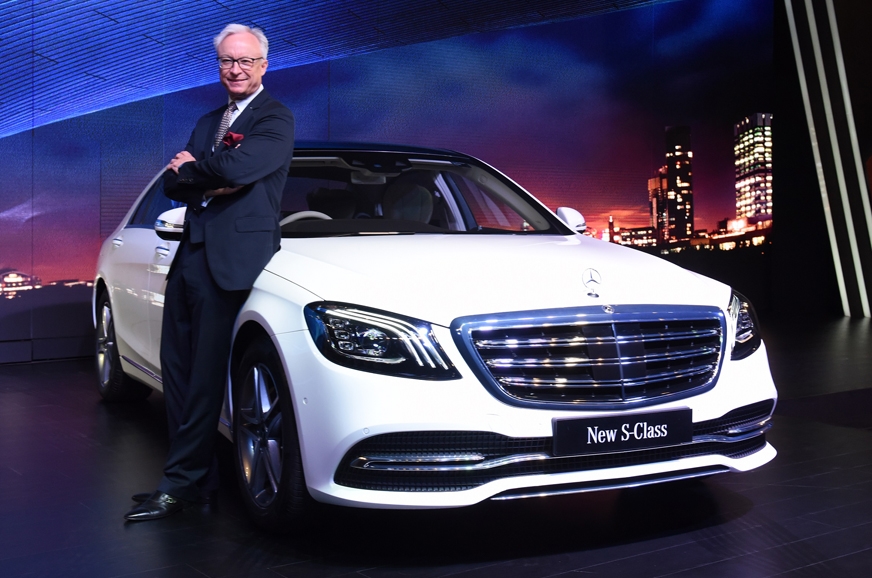
- Mercedes has launched the S-class facelift at Rs. 1.33 Crore for the
diesel engine S 350d and Rs 1.37 Crore for the petrol engine S 450 (all
prices, ex-showroom, India). The S-class has always remained a top pick
among luxury car buyers, with the German carmaker selling over 6,700 of
them in last 18 years in India. The new models comply with Bharat Stage-VI emission norms while running on BS-IV grade fuel.
- Speaking to Autocar India at the unveil,
Mercedes-Benz India boss, Roland Folger, shared that the company used
the learnings from the conversion of Euro-V to Euro-VI in Europe, back
in 2010. It had faced a similar challenge due to limited availability of
Euro-VI grade fuel across the European region.
- A new 3.0-litre, in-line, six-cylinder diesel motor has replaced the
previous 3.0-litre V6 diesel in the new S 350d. In a bid to meet the
upcoming BS-VI norms, this new OM656 engine emits 68 percent less
nitrous oxide and 82 percent less particulate matter, while running on
BS-IV grade fuel. The engine is mated to a nine-speed G-Tronic automatic
transmission and churns out a good 28hp more than the previous engine
at 286hp. However, the torque figure, at 600Nm, is lower by 20Nm.
- The S 450 is powered by a 3.0-litre, V6, petrol engine that cranks
out 367hp of maximum output and 500Nm of peak torque, and is mated to
the same nine-speed automatic gearbox. Both the refreshed cars are
equipped with new-gen, radar-based driver assist features like active
distance assist with emergency braking and active steering assist.
- On the exterior front, the new S-class isn’t all that different from
the previous model, with alterations limited to new triple-striped LED
headlamps, new tail-lamps and subtly re-profiled bumpers. On the inside,
Mercedes has included a new, horizontally elongated, 12.3-inch
touchscreen unit, which adds futuristic appeal to the interiors. The new
leather and wood trim option for the interior inlays and seats sides is
also new. The update also adds a new fragrance and 64 ambient lighting
options. Moreover, ventilated seats with a massage function and
four-zone climate control continue to compliment the luxury quotient of
the S-class.
- As per the Supreme Court ruling, BS-VI grade fuel is expected to be
retailed in the Delhi-NCR region from April this year, though it will be
made available much later across the country.
- Volvo created a new niche segment of a standard sedan offering higher ground clearance with the S60 Cross Country. The sedan made its debut at the Detroit Motor Show 2015, and Volvo India has recently announced that the car will be launching on March 11, 2016.

- The car is not only visually jacked up – ride height up by 65mm over the standard S60 – but it also comes with an all-wheel drive system with raised ride height to allow buyers the choice of a four-door sedan body style and yet give them the freedom for occasional off-roading.
- Internationally, the S60 Cross Country gets the option of front-wheel drive and all-wheel-drive. For India, the S60 Cross Country will come with a five-cylinder 2.4-litre D4 engine that makes 178bhp. The car will come with the same equipment seen on the top-spec standard S60 sedan.
- Volvo is expected to launch a slew of new models this year in India with the company expected to introduce its Polestar performance division sometime during the year with a performance version of the S60 sedan along with more mainstream models like the V40 and V40 Cross Country facelifts.
- As a result, kei cars could be 200mm longer and 100mm wider, although
with the government announcing the change in August 1975, carmakers had
little time to react.
- As carmakers developed new and better kei cars, sales increased. Kei
cars were also a viable export proposition, with many heading for
Europe.
- The modern kei car was born in 1990. By allowing an extra 110cc and a
100mm longer bodyshell, the kei car had come of age. Many 660cc heroes
were born.
- The Japanese government introduced a 64hp limit, although the fitment of
superchargers and turbochargers meant that carmakers could achieve
startling performance figures and remarkable fuel economy.
- Many people were introduced to the wild and wonderful kei cars via the
Gran Turismo PlayStation game, first introduced in at the end of 1997.
- Crucially, the kei car regulations only restrict physical size and
engine displacement, leaving carmakers to play with rear-wheel drive,
four-wheel drive, turbochargers, superchargers, automatic transmissions
and CVTs.
- In 2011, Subaru - one of the sector’s pioneers - ceased building kei
cars, bringing to an end 54 years of production. But Subaru didn’t leave
the sector altogether, as the current Stella is built by Daihatsu.
- In 2013, The Japan Times reported that kei cars accounted for 30% of
sales in Japan, with the US claiming they provide an unfair barrier to
trade. In effect, a third of the customer base is unavailable to foreign
carmakers. By the end of 2014, kei cars accounted for a staggering 40% of sales in
Japan, with a record 2.3 million tiny cars finding new homes. Concerned that carmakers are focusing too much on the domestic market,
the Japanese government has introduced a higher tax on kei cars.
- According to the Best Selling Cars Blog, the Honda N-Box is the most
popular kei car in Japan, topping the charts for the 10th consecutive
month. Total sales in October 2015: 12,277.
- In second place is the Daihatsu Tanto, a rather cool kei car introduced
in 2003. On one side you’ll find a standard rear door, while the other
side features a sliding door. Neat. This photo was taken at the 2007
Tokyo Motor Show.
- In third place, fresh from its recent facelift, is the Nissan Dayz. The
revamp has had an immediate effect, with sales up 13%. Happy Dayz for
Nissan. This is the Teatro for Dayz concept, shown at the 2015 Tokyo
Motor Show.
- In its first full month on sale, the Daihatsu Cast found 8,895 new
homes. The funky looking Daihatsu brings to mind the Fiat 500L. Only
smaller. And prettier. And more appealing.
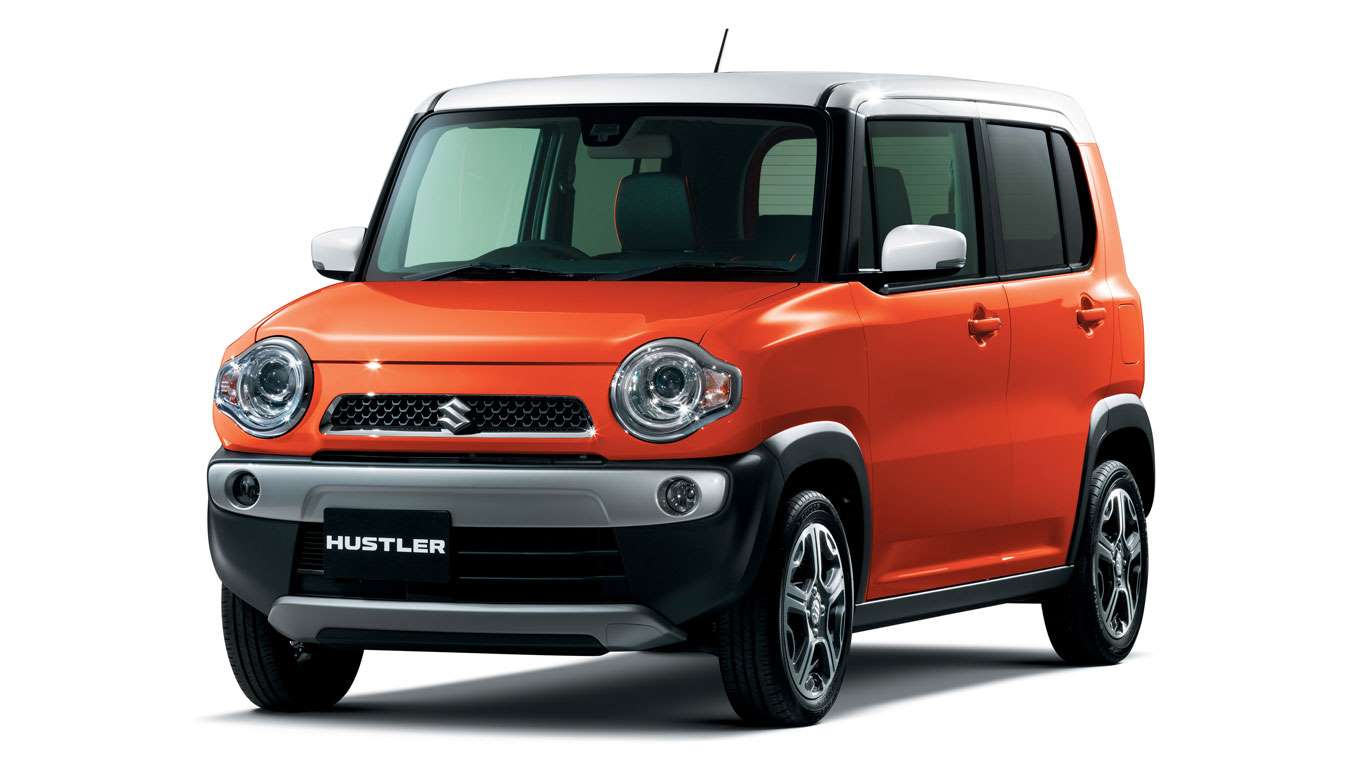
- Love this thing! The Suzuki Hustler was the fifth best-selling kei car
in October. It’s little wonder kei cars are so popular. Look at it.
- If the previous five cars offer a glimpse into kei cars of the present,
the Honda S660 is a tantalising glimpse into kei cars of the future. The
successor to the Beat might come to the UK.
- In Japanese spec, the mid-engined, rear-wheel drive S660 features a
660cc engine, but there are rumours it might be sold in the UK with a
1.0-litre turbocharged engine. Honda, please make this happen.
- But not all Japanese small cars are kei cars. The Toyota iQ is a good
case in point. It’s beautifully packaged, but too wide to be classed as a
kei car. The 1.0-litre engine is also too big.
Keep visiting for Part - 3.......
- The Bugatti Chiron will make its global debut at the Geneva motor show
in March 2016 as the replacement to the Bugatti Veyron, the manufacturer
has confirmed.
- More than 100 orders have been placed for the supercar which takes its
name from Louis Chiron, a Bugatti Grand Prix racer in the 1920s and
1930s who won the 1931 French Grand Prix with the manufacturer.
- The Chiron was previewed by Bugatti’s Vision GranTurismo concept
showcased at the Frankfurt motor show, and the new hypercar prototype
was spotted testing in California recently in minimal camouflage. The
Chiron is currently undergoing initial conceptual engineering tests in a
programme that will see the car make its debut in 2016 prior to planned
customer deliveries the following year.
- A few probable customers were shown the car as part of the Pebble Beach Concours d'Elegance. The Chiron is believed to wear a more striking and sportier look, and
feature new active aerodynamic functions that aim to provide varying
levels of downforce depending on the driving mode chosen.
- The Veyron replacement is set to adopt a heavily updated version of its
predecessor’s turbocharged 8.0-litre W16 engine which will channel power
to all four wheels via a seven-speed dual-clutch automatic gearbox and
multi-plate-clutch four-wheel-drive system. However, the big news
centres around plans to provide the new Bugatti with hybrid drive by way
of a disc-shaped electric motor mounted within the gearbox housing and a
lithium-ion battery.
- The fuel efficiency will also be improved with new direct-injection
combustion process replacing the multi-point injection system. The
Chiron is believed to produce power in the region of 1479bhp, according
to officials. There are also rumours about Volkswagen engineers looking
at electric turbochargers for the Chiron which will further improve the
already colossal torque.
- Major efforts are also being made to ensure that the weight of the new
car remains well below that of the 1,840kg Veyron Super Sport. The
Chiron aims to beat the Veyron Super Sport’s blistering 0-100 time of
2.5secs to 2.3secs and achieve a top speed of 460kph. However, proving
the top speed could be tricky due to the challenges in finding a test
site long enough, and for tyre technology to support such a high-speed
run.
- As with the Veyron, production of the Chiron will be limited to about
450 units and it will challenge the Pagani Huayra and Koenigsegg One:1.